

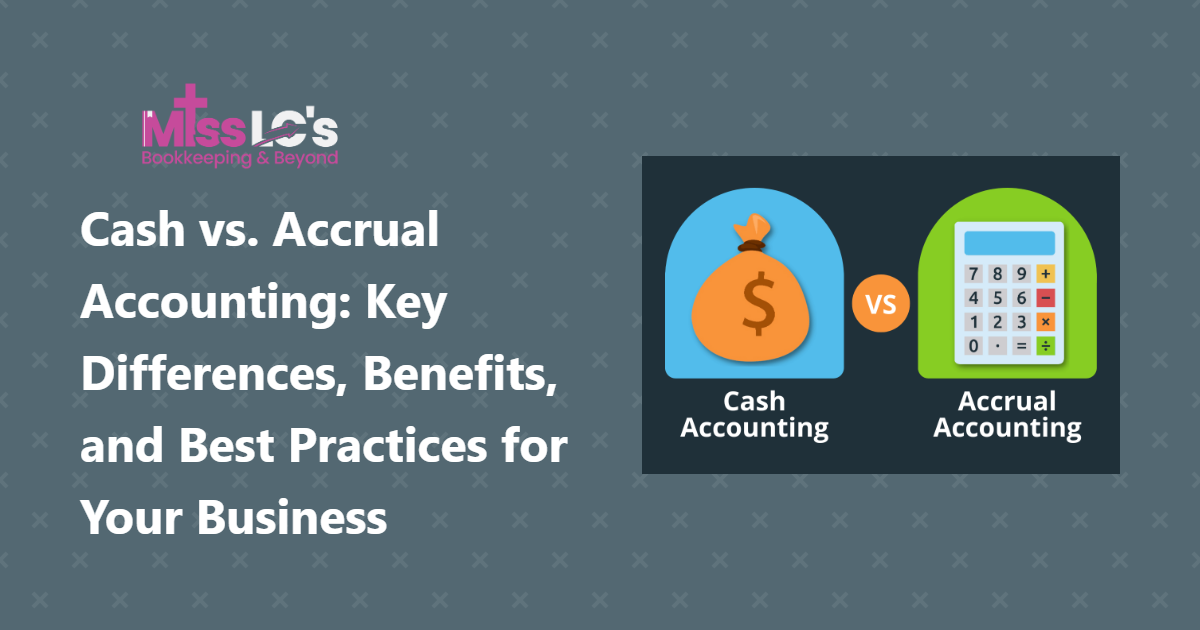
Have you ever thought about how companies keep track of their money? Doesn’t it seem simple? But how you keep track of your money can have a big effect on how well your business does. No matter how big or small your business is, keeping track of your income and expenses is more important than you might think.
There are two main ways to keep track of your money: cash basis and accrual basis. Each method changes how you make your financial statements, file your taxes, and check on how well your business is doing.
In this article, we’ll talk about how these two ways of keeping books are different. We’ll also talk about how picking the right one could change everything from how you manage your money to how much you owe in taxes.
Cash vs Accrual Accounting: Which is Right for Your Business?
What kind of accounting is best for your business: cash or accrual?
Have you ever thought about how companies keep track of their money? Isn’t it simple? But how you keep track of your money can have a big effect on how well your business does. No matter how big or small your business is, how you keep track of your money is more important than you might think.
There are two main ways to keep track of money: on a cash basis and on an accrual basis. The method you choose will affect how you make your financial statements, file your taxes, and check on the health of your business.
This article will talk about the differences between these two ways of keeping books. We’ll also talk about how picking the right one can change everything from how you handle your money to how much you owe in taxes.
Key Points: In a Nutshell
Cash accounting: Keeps track of money that comes in and goes out when it changes hands. It’s easy to understand.
Accrual accounting: records income and expenses as they happen, not when the money is received or paid.
Cash accounting: Best for small businesses with simple transactions because it makes tracking money easier.
Accrual accounting: is better for big businesses or those with long-term contracts, a lot of inventory, or complicated financial transactions because it shows how healthy their finances are.
